Search across courses, lessons, cases, drills, coaches and more.
Ask anything about cases, applications and recruiting. Members and coaches answer.
I've heard everything from weekly flights to almost no travel for new analysts. How much does travel really vary by office versus by project, and what should I ask before choosing an office?
Mayank G.CoachTravel varies much more by project, client and practice area than the old stereotype of flying every Monday. Some analysts still travel frequently, while others spend long periods working locally or remotely.
I'm worried my fit stories are weak because I'm only 21 and haven't managed people at work. Can strong examples come from student clubs, sports, volunteering, or class projects?
Mayank G.CoachYou can use stories from clubs, sports, volunteering, research, class projects or part-time jobs. The setting matters less than whether the situation had real stakes and your personal actions are clear.

I'm new to market sizing and keep getting stuck on where to start. Should I memorize common numbers and approaches, or is there a better way to practice the first few problems?
Mayank G.CoachStart market sizing by defining exactly what you are estimating: geography, customer, time period and unit. Many weak answers come from solving the wrong market rather than from bad arithmetic.

I'm taking McKinsey Solve for the first time and most of my prep so far has been normal case interviews. What should an undergrad focus on that is different from regular casing?
Mayank G.CoachMcKinsey Solve can change over time, so avoid preparing from a single old walkthrough as if it were permanent. Use your current invitation and McKinsey-provided instructions to confirm the assessment you are actually taking.
An alum I met through my university offered to run a practice case with me. Should I treat it like a normal mock interview, or is there anything different I should do because they work at the firm I'm applying to?
Mayank G.CoachTreat the offer as a genuine practice opportunity and prepare for it. The alum may simply want to help, but your preparation and coachability can also affect how comfortable they feel advocating for you later.

An alum I spoke with has been helpful, but we have only had one conversation. How do I know when it is appropriate to ask for a referral without making the relationship feel transactional?
Mayank G.CoachDo not make the first interaction a referral transaction. An alum is more likely to advocate for you when they understand your background, interest and fit rather than receiving a cold request with no context.

I go to a school where I don't know anyone personally in consulting. If you're starting from zero, what is the most realistic way to build a network without sending hundreds of random LinkedIn messages?
Mayank G.CoachStart by looking for weak ties rather than assuming you have zero network. Alumni, professors, classmates, former interns, family contacts and people from student organizations can often create the first introduction.

I have leadership roles in two student organizations, but my current resume bullets read like job descriptions. How do I turn club work into bullets that actually show impact without making it sound exaggerated?
Mayank G.CoachStart with what changed because of your work, not with the title you held. 'Vice President, Finance Society' tells the recruiter almost nothing about your actual contribution.

Most of my experience is clubs, class projects, volunteering, and one small summer job. I don't have a brand-name internship yet. How do I make a consulting resume look credible without trying to inflate what I've done?
Mayank G.CoachYou do not need a traditional corporate job to create a credible consulting resume. Strong material can come from research, volunteer work, student organizations, case competitions, class projects and part-time roles.

If I get a consulting internship, I want to understand what actually drives the return-offer decision. Is it mainly case-style problem solving, work quality, relationships with the team, or something else?
Mayank G.CoachA return offer usually comes from consistent execution rather than one impressive moment. Teams notice whether you are reliable, coachable, careful with details and able to improve after feedback.

I may have a consulting internship opportunity next summer, but I have no idea what interns are actually trusted to do. Are you mostly shadowing, or do interns get real analysis, slides, and client-facing work?
Mayank G.CoachConsulting interns usually do real project work rather than simply shadowing. Depending on the team, that can include research, Excel analysis, slide drafting, interview notes, market sizing, data cleanup and preparation for internal or client meetings.

I'm interested in consulting but probably don't see myself staying long term. After roughly two years as an analyst, what exits are genuinely common versus the ones people talk about but rarely get?
Mayank G.CoachCommon exits after two years include corporate strategy, operations, product, growth, finance, startups and graduate school, while some analysts stay for promotion. The specific opportunities depend heavily on what projects, industries and skills you built.

I'm recruiting for consulting, banking, and a few strategy roles in tech. The pay is only one part of it, so how would you compare the first two or three years across these paths in terms of learning, hours, and exits?
Mayank G.CoachThere is no universal winner because consulting, banking and tech build different kinds of career capital. Banking concentrates finance and transaction skills, tech can build deeper product or functional ownership, and consulting gives broader exposure to industries and business problems.

I've read a lot about consulting at a high level, but I still can't picture what a first-year analyst actually does from Monday to Friday. How much time is spent on Excel, slides, meetings, research, and client work?
Mayank G.CoachYour first year is usually a mix of analysis, slides, meetings, research, note-taking, quality checks and frequent feedback. The exact balance changes by project, but very little of the job is just sitting alone and solving a clean business problem.

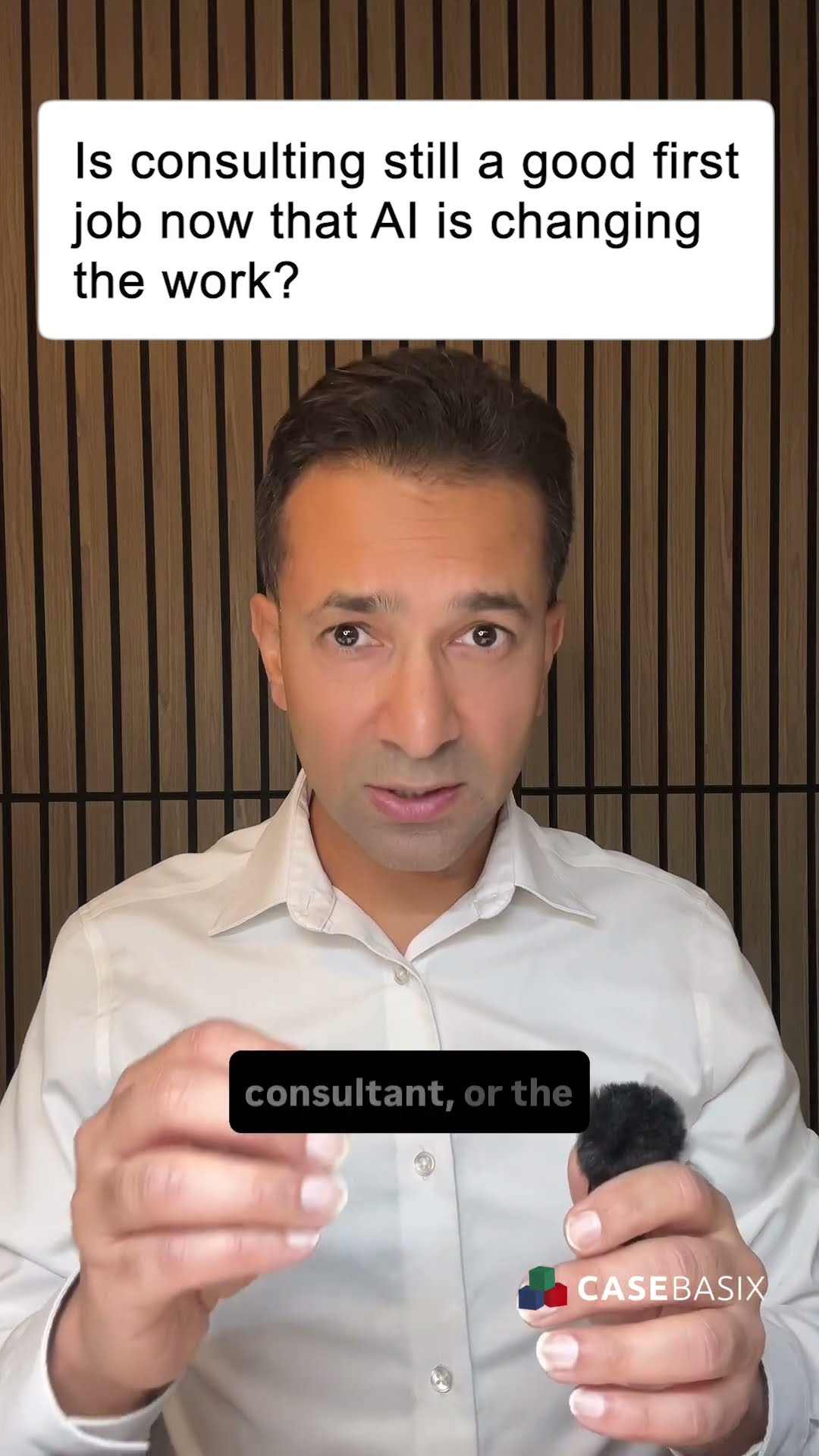
I'm a junior deciding between consulting, banking, and tech recruiting. With firms using more AI for research and analysis, I'm wondering whether consulting still gives a new grad the same learning curve and career value it used to.
Mayank G.CoachConsulting can still be a strong first job, but the reasons are shifting. AI is reducing the value of some junior tasks such as basic research, first-draft analysis and repetitive slide production, so analysts increasingly need to add judgment, synthesis and communication earlier.

Most of my time went into internships and part-time work, so my resume does not have the club-president type experience I see on many consulting profiles.
Mayank G.CoachIt is not automatically a major weakness if your experiences still show ownership, teamwork, and impact.
I have never received a full-time professional offer before. Besides base salary, what terms should I expect in an undergrad consulting offer, and which ones are actually worth comparing?
Mayank G.CoachAn entry-level consulting offer usually includes more than base salary. Depending on the firm and country, you may also see a signing bonus, performance bonus, retirement or pension contributions, health benefits, relocation support and a defined start date.
I can finish undergrad one semester early, which puts me in an awkward recruiting timeline. I'm technically still a student during internship recruiting, but I could graduate before the following summer. How should I think about internship versus full-time applications?
Mayank G.CoachRecruit based on the role you will actually be eligible to start, not only on your current student status.
I am already in junior year and recruiting is getting close. I never joined the consulting club because I thought it would be mostly first-year stuff. Is it still worth joining now, or should I just spend that time on case prep and applications?
Mayank G.CoachIt can still be useful if the club gives you access to peers, mock cases, alumni, or recruiting information you would actually use.
I am a sophomore and I have good grades but basically no leadership titles yet. Junior-year consulting recruiting feels close and I keep seeing resumes with club presidents and founders. What can I realistically build over the next year that would still make a difference?
Mayank G.CoachYou still have time to build meaningful evidence of leadership, and it does not need to come from having the biggest title on campus.