Search across courses, lessons, cases, drills, coaches and more.
Ask anything about cases, applications and recruiting. Members and coaches answer.
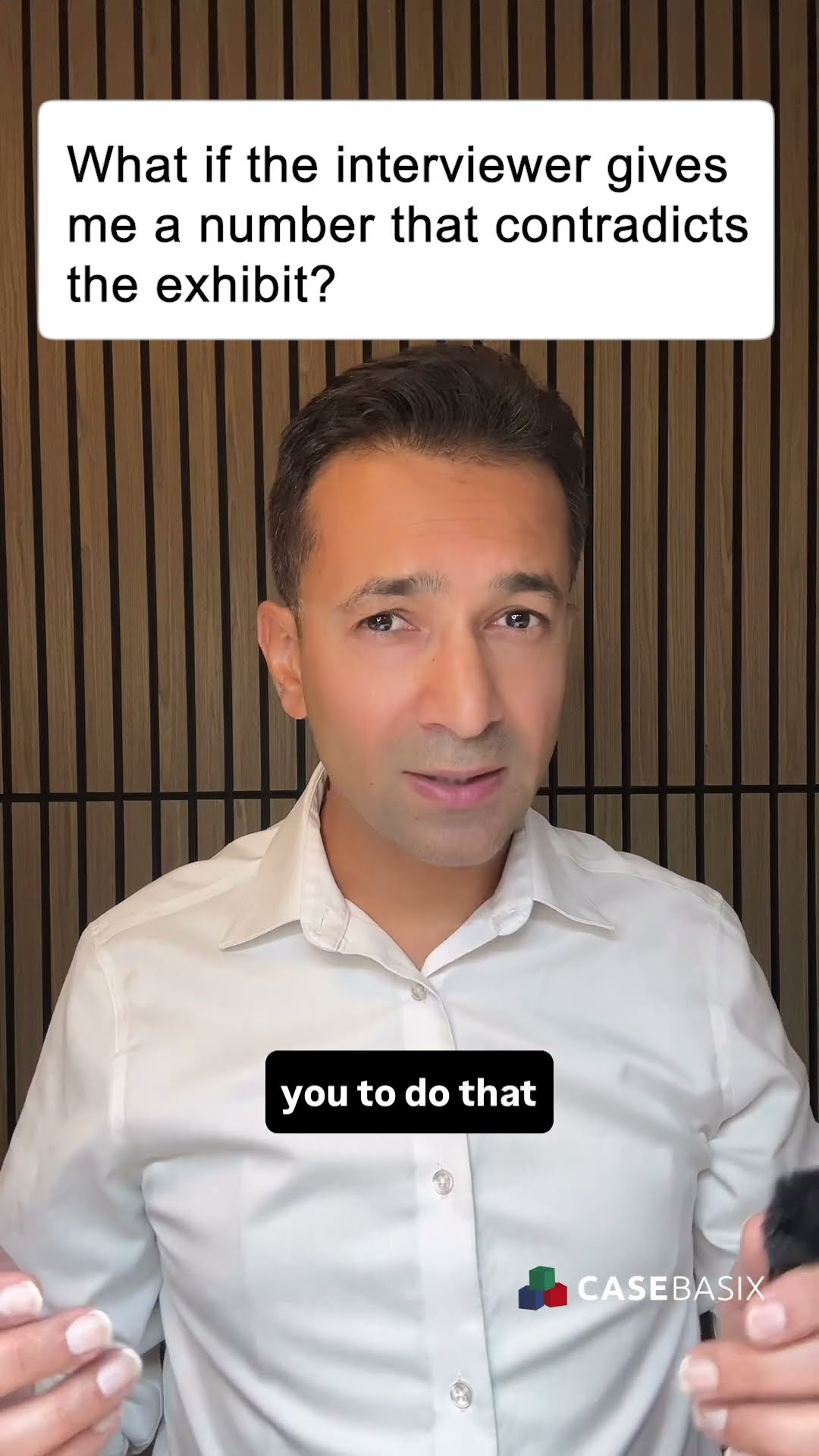
In practice, my interviewer verbally gave me a number that didn't match the chart on screen. I wasn't sure whether to trust the exhibit or the interviewer. What should I do in the moment?
Mayank G.CoachClarify the discrepancy immediately instead of choosing one source silently.
For some market-sizing questions I can see both a customer-demand approach and a supply/capacity approach. How do I decide which one to use in the interview?
Mayank G.CoachChoose the approach that uses the most reliable assumptions and connects most directly to the market you are sizing.

I've heard everything from weekly flights to almost no travel for new analysts. How much does travel really vary by office versus by project, and what should I ask before choosing an office?
Mayank G.CoachTravel varies much more by project, client and practice area than the old stereotype of flying every Monday. Some analysts still travel frequently, while others spend long periods working locally or remotely.

I struggle with picking my approach to the case. How do I get better at choosing the right approach?
Mayank G.CoachStart with the objective and the decision the client needs to make, then choose an approach that directly helps answer that question.

How can I prepare for a Bain consulting interview if my math skills are very weak?
Mayank G.CoachPrioritize the math fundamentals that actually appear in cases, then practice explaining your setup clearly under time pressure.

I want market sizing practice drills to get better at it. What is the best way to practice market sizing?
Mayank G.CoachPractice the underlying steps repeatedly: define the market, choose a sensible approach, make transparent assumptions, calculate accurately, and sanity-check the result.

How do I break into a consulting firm in a different country or culture from my own?
Mayank G.CoachTreat it as both a consulting recruiting problem and a local-market problem.

My recommendations get weak whenever the case has unresolved risks. I end up saying 'it depends' and listing caveats until the actual recommendation disappears. How do you sound decisive without pretending the risks are not real?
Mayank G.CoachLead with the recommendation first, then explain the two or three reasons supporting it and the most important risk.

My first-round interviewer was very casual on video, basically a T-shirt and headset. I wore a blazer and felt overdressed. If the next round is also virtual, should I match the firm's casual vibe or keep dressing formally?
Mayank G.CoachKeep your own interview attire professional even if one interviewer dresses casually. Their clothing is not necessarily guidance for candidates.

The call was very short and mostly logistical, but the recruiter did answer a couple of questions about the office. A full thank-you email feels almost too formal for ten minutes. Is it still worth sending something?
Mayank G.CoachA short thank-you is appropriate if the recruiter gave you useful time or information, but it does not need to be formal.

I'm genuinely flexible on location and could see myself in either a major office or a smaller one. How should I compare big versus small MBB offices for MBA recruiting, project opportunities and long-term experience?
Mayank G.CoachChoose based on fit and the work you want, not on a simplistic assumption that one office size is easier to enter.

I have several years of work experience plus the MBA, so my background can get long quickly. How long should my opening 'Tell me about yourself' answer be in an MBB interview?
Mayank G.CoachKeep the core answer concise enough to create a conversation rather than reciting your full resume.

Most of my strongest leadership examples are from my pre-MBA job, but I'm worried interviewers expect recent stories from business school. Should I prioritize MBA examples even if they are less substantial?
Mayank G.CoachUse the strongest and most relevant stories, regardless of whether they happened before or during the MBA.

I am employed and expect interviewers to ask why I want to switch careers now. How do I answer why I'm leaving my current job?
Mayank G.CoachExplain why you're leaving your current job in positive, future-focused terms without criticizing your employer.

I had BCG R1 recently and the whole case felt decent except for the math parts. I got to the right answers eventually, but I could tell I was slower than I should have been and the interviewer had to nudge me once or twice. Now I got rejected and I keep replaying that part in my head. Can slow math alone sink an otherwise okay case, or is it more likely there were other issues too? Trying to…
Mayank G.CoachSlow math can absolutely hurt your performance, but it is usually not the only thing the interviewer is evaluating. What often matters more is whether the slow math disrupted the flow of your thinking, your confidence, or the clarity of your communication.

I haven't managed employees, although I've organized teams for university projects. How do I show leadership without managing anyone?
Mayank G.CoachYou can show leadership without direct reports by describing situations where you influenced people or coordinated a result.

My case structures usually make sense eventually, but I spend too much time listing branches before speaking. How do I finish structuring in under five minutes?
Mayank G.CoachThe goal isn't to force every case structure into five minutes; it's to build a useful, tailored approach efficiently.

I had a McKinsey case and there was one multiple-choice style question where I chose the wrong option. I realized it later and now that one moment is stuck in my head way more than the rest of the interview. Can you still get through after messing up a question like that, or is it usually game over once that happens?
Mayank G.CoachOne wrong answer does not automatically end your chances. Interviewers are evaluating the total performance, not treating the interview like a one-question exam.

I have BCG Round 1 coming up soon and I feel decently prepared, but I am still nervous about whether there is anything specific I should be keeping top of mind for that first round. Any advice that actually helped people going into BCG R1?
Mayank G.CoachAt this stage, you are usually better off reinforcing a few high-value basics than chasing new exotic tips. Focus on clean structure, calm communication, solid math, and strong synthesis.

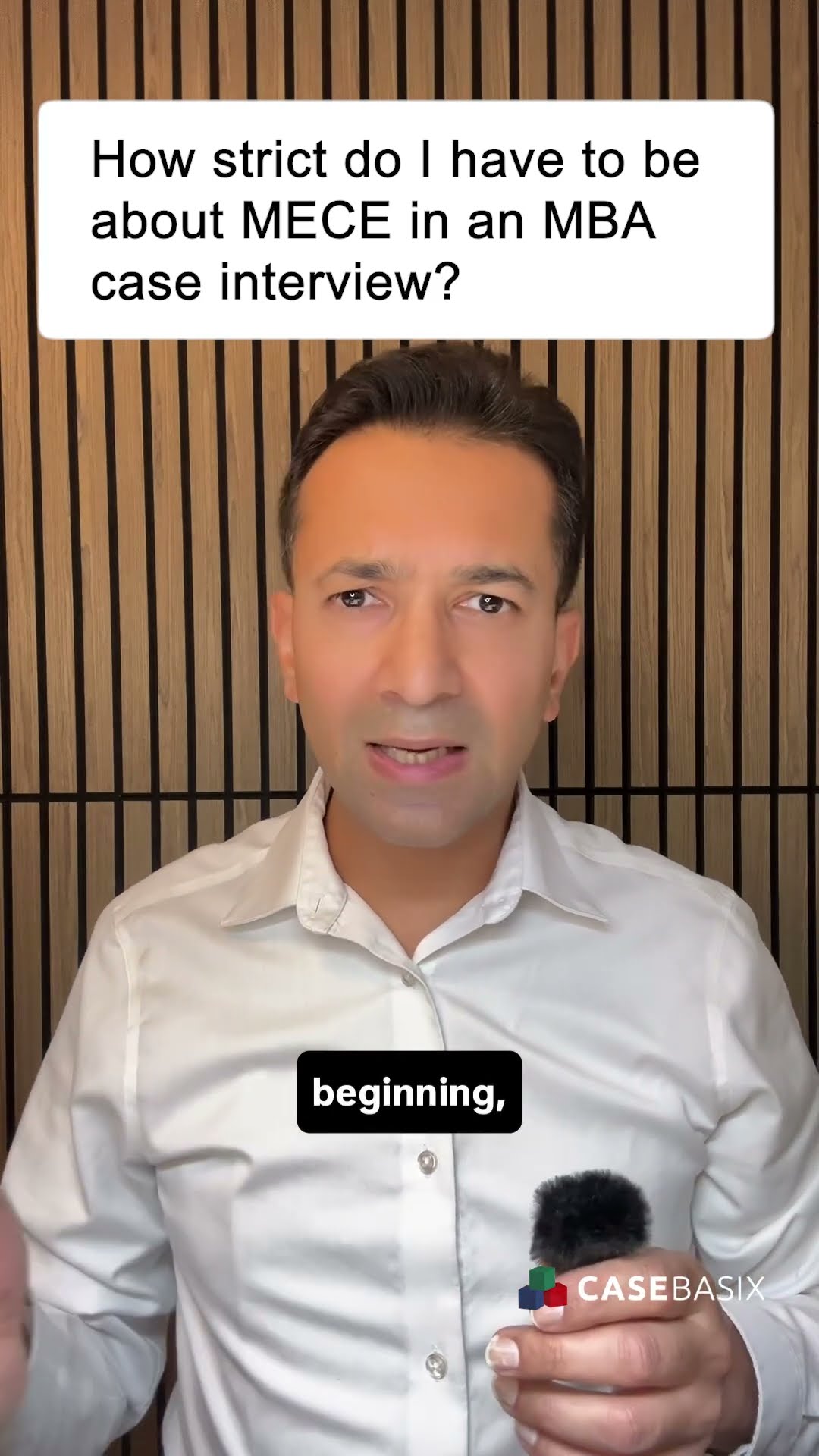
I understand the idea of MECE, but I sometimes spend too long trying to make every case structure perfectly non-overlapping. How strict are MBB interviewers about MECE versus having a practical structure that helps solve the problem?
Mayank G.CoachMECE is a useful principle, not a reason to freeze while trying to build a mathematically perfect framework.